

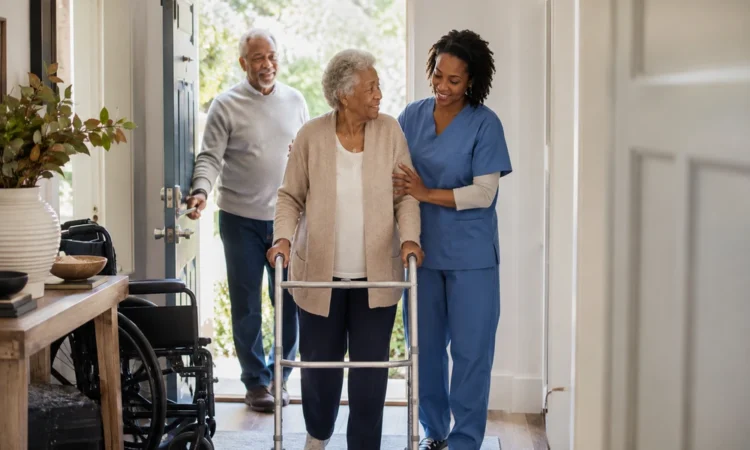
Moving from a nursing facility back into the community can be an important step toward greater independence. It can also introduce practical challenges that are easy to overlook when attention is focused mainly on the moving date.
A successful transition involves more than arranging transportation and bringing personal belongings home. The person may need help with daily activities, medical appointments, meals, mobility, household tasks, transportation, or navigating services in the community.
Planning for these needs before the transition can make the home environment more manageable and help families identify gaps before they become urgent problems.
Evaluate the Home Before the Move
Start by looking at the home from the perspective of the person who will be living there.
Consider how easily they can enter and leave the property, move between rooms, use the bathroom, prepare or access meals, and reach commonly used items. Stairs, narrow pathways, rugs, poor lighting, or difficult bathroom layouts can become significant obstacles for someone whose mobility has changed.
The goal is not necessarily to redesign the entire home. Instead, identify barriers that could interfere with everyday activities and determine which changes are most important.
Depending on individual needs, solutions might include rearranging furniture, improving lighting, relocating frequently used items, or exploring appropriate accessibility modifications.
The person’s preferences should remain central to these decisions. A home should support independence rather than simply becoming a more clinical version of the facility they are leaving.
Build a Support System Beyond Family Caregiving
Families often play a major role when someone returns home, but a sustainable plan should not assume that relatives can handle every responsibility indefinitely.
Make a realistic list of the assistance the person may need throughout a typical week. This might include personal care, meal preparation, household tasks, transportation, medication reminders, appointments, shopping, or help participating in community activities.
Next, identify who will handle each responsibility and when.
Doing this exercise often reveals gaps. A relative may be available during evenings but not during the workday. Another family member may be able to provide transportation but cannot assist with personal care. Someone who lives nearby may be able to respond occasionally but should not automatically become the emergency plan.
Formal services can help address some of these gaps. For eligible New Yorkers, the nhtd waiver program is one pathway to home- and community-based services for certain seniors and people with physical disabilities who want to live in the community rather than a nursing facility.
The appropriate combination of services will vary from person to person, which is why planning should begin with actual daily needs rather than assumptions about what a standard care arrangement should look like.
Coordinate Healthcare and Everyday Life
Leaving a nursing facility can change how healthcare is organized.
Before the transition, make sure everyone involved understands how follow-up appointments will be handled, which healthcare professionals need to remain involved, and how the person will get to appointments.
It is also useful to create one accessible place for important information. This might include a current medication list, healthcare contacts, appointment details, insurance information, emergency contacts, and instructions that family members or caregivers may need.
But healthcare planning should not overshadow everyday life.
Someone living successfully in the community also needs practical ways to obtain groceries, maintain the home, connect with other people, participate in preferred activities, and manage transportation.
A plan that addresses medical needs but ignores these everyday requirements can leave significant gaps.
Create a Backup Plan Before It Is Needed
Even a carefully organized support arrangement can be disrupted.
A family caregiver may become sick. Transportation may fall through. A regular helper may become unavailable. Weather can interfere with appointments or deliveries.
Instead of solving these situations for the first time during an emergency, discuss alternatives beforehand.
Identify who can be contacted if a regular caregiver is unavailable. Keep important phone numbers easy to find. Consider how essential supplies and meals would be obtained if leaving the home temporarily becomes difficult.
Families should also know which situations require routine assistance and which require professional medical attention or emergency services. Having clear expectations can reduce confusion when circumstances change unexpectedly.
Backup planning is especially important when one person carries most of the responsibility. A care arrangement that depends entirely on a single relative or caregiver can become fragile very quickly when that person is unavailable.
Keep the Person at the Center of the Plan
Transition planning can easily turn into a conversation between professionals and family members about what they believe is safest or most convenient.
The person returning home should have a meaningful role in those decisions whenever possible.
Ask what routines are important to them. Discuss which activities they want to resume, who they feel comfortable receiving assistance from, and what greater independence means in their particular situation.
Some people may prioritize spending more time with family. Others may want to return to religious services, hobbies, neighborhood activities, or simply regain control over their daily schedule.
Community living is not only about where someone receives care. It is also about having meaningful choices concerning how everyday life is structured.
Conclusion
A safe return home requires more than a discharge date. Families need to consider the physical environment, everyday assistance, healthcare coordination, transportation, community participation, and backup support.
Starting these conversations early makes it easier to identify where informal help is sufficient and where additional services may be needed.
Most importantly, transition planning should reflect the goals, preferences, and abilities of the person returning home. The strongest community-care plans are not built around a generic definition of independence. They are built around what a workable and meaningful daily life looks like for the individual.