

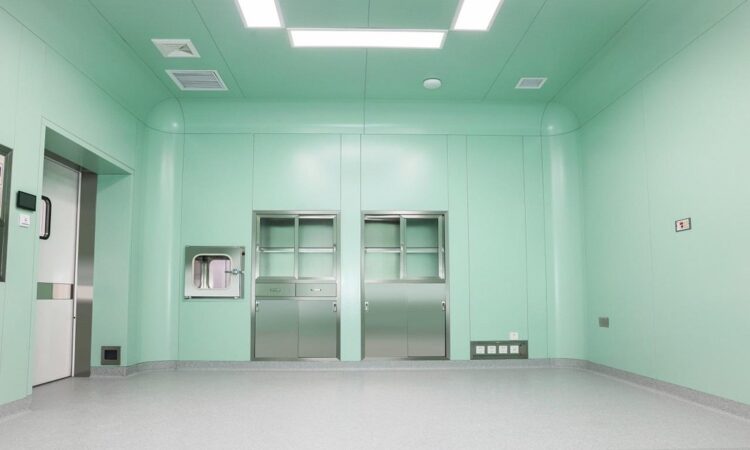
Traditional operating room construction often creates challenges such as inefficient layouts, bulky infrastructure systems, and limited flexibility for future expansion.
To address these issues, many healthcare facilities are now adopting modular operating theatre design as an effective space optimization solution.
Modular operating theatres combine smart engineering, prefabricated construction, and integrated healthcare infrastructure to help hospitals improve space utilization while maintaining high standards of infection control and surgical performance.
The Importance of Space Optimization in Hospitals
Hospital space is one of the most valuable assets in healthcare infrastructure planning.
Efficient space utilization can help hospitals:
- Increase surgical capacity
- Improve workflow efficiency
- Reduce operational costs
- Enhance staff productivity
- Improve patient experience
- Simplify future expansion
Poorly designed operating theatres may result in overcrowding, workflow interruptions, equipment conflicts, and inefficient use of clinical areas.
As hospitals continue to modernize, optimizing operating theatre space has become a major priority.
Integrated Design Improves Space Efficiency
One of the biggest advantages of modular OT systems is integrated infrastructure design.
Traditional operating rooms often require separate installations for:
- HVAC systems
- Electrical systems
- Medical gas pipelines
- Storage units
- Control systems
These systems may consume valuable floor and ceiling space if not properly coordinated.
Modular operating theatre design integrates these systems directly into wall panels, ceilings, and built-in structures, creating cleaner and more organized surgical environments.
This integrated approach helps hospitals optimize both usable floor area and equipment accessibility.
Built-In Storage Reduces Clutter
Storage management is a major challenge in many hospital operating rooms.
Traditional layouts may require additional cabinets and movable storage equipment, which can reduce working space and create workflow obstacles.
Modular OT systems often include built-in stainless steel furniture such as:
- Storage cabinets
- Instrument cabinets
- Scrub stations
- Writing desks
- Medical supply units
Integrated storage solutions reduce clutter while improving organization and workflow efficiency.
Flexible Room Layouts for Different Surgical Needs
Different surgical specialties require different operating room layouts.
Modular operating theatre systems provide flexible design configurations that can be customized for:
- Orthopedic surgery
- Cardiac surgery
- Neurosurgery
- Ophthalmology
- Emergency surgery
This flexibility allows hospitals to optimize room dimensions, equipment placement, and staff movement according to specific clinical requirements.
Efficient room planning helps maximize surgical productivity without increasing building footprint.
Optimized Ceiling Systems Create More Usable Space
In traditional operating theatres, exposed ceiling infrastructure can create congestion and limit equipment positioning.
Modular ceiling systems are designed to integrate:
- Laminar airflow units
- OT lights
- Pendants
- HVAC systems
- Medical gas lines
into a coordinated structural layout.
This improves spatial organization while creating a cleaner and more efficient surgical environment.
Easier Expansion and Renovation
Hospital infrastructure requirements often change over time.
Modular operating theatre systems provide flexibility for future:
- Expansion
- Reconfiguration
- Equipment upgrades
- Department renovation
Because modular systems are prefabricated and standardized, hospitals can modify operating theatre layouts more easily compared to traditional construction methods.
This adaptability helps healthcare facilities optimize long-term space planning.
Improved Workflow Efficiency
Efficient surgical workflow is essential for hospital productivity.
Poor operating theatre layouts may lead to:
- Equipment congestion
- Staff movement conflicts
- Delayed procedures
- Reduced operational efficiency
Modular OT design improves workflow through:
- Better equipment integration
- Organized infrastructure layout
- Optimized staff circulation
- Efficient zoning of sterile and non-sterile areas
These improvements help hospitals perform surgical procedures more efficiently while maximizing room utilization.
Future of Space-Efficient Hospital Design
As healthcare systems continue to evolve, hospitals are increasingly adopting smarter infrastructure strategies focused on flexibility, efficiency, and sustainability.
Future trends include:
Modular operating theatre technology is expected to play a major role in helping hospitals optimize infrastructure while meeting growing healthcare demands.
Conclusion
Modular operating theatre design offers hospitals an effective solution for optimizing space while improving surgical efficiency, workflow organization, and infrastructure flexibility.
By integrating critical systems into a coordinated modular structure, hospitals can reduce clutter, improve functionality, and maximize usable clinical space.